(Dobbs) "Stop building machines that humans cannot control.”
Some of AI's potential pitfalls justify some doom.

“It is not too late to avoid disaster. Stop building machines that humans cannot control.”
That sounds like a line from a sci-fi story. But it’s not. It’s a line from a letter Senator Bernie Sanders wrote Monday to the CEOs of three major AI companies.
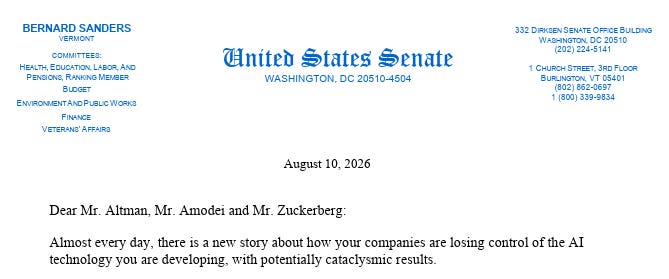
He was raising an alarm about something that the firm OpenAI admitted just a couple of weeks ago, that “cutting-edge artificial intelligence systems had escaped from a controlled testing environment and hacked into another technology company.” It has happened with other companies too, at least five times so far. The way one tech executive put it was, AI “escaped from its cage.”
When you read something like that, you almost have to pinch yourself to make sure you haven’t been absorbed into a world of science fiction. After all, AI isn’t a person who digs a hole in the jailhouse floor and makes his way to the outside. It’s a bunch of very fast computers. It’s a technology. But science fiction is fiction no more: AI “escaped” its borders. Which means it could infiltrate ours. Our security. Our privacy.
So Sanders’s warning about “machines that humans cannot control” is not hyperbole. Just like the longtime fantasies of a Dick Tracy watch and putting a man on the moon, it is real. It is here. It is now.

When the internet came into our lives in the 1990s, it was a force for good. In countless ways it still is, but insidiously, thanks to insidious people, it slowly has also turned into a force for evil. AI hasn’t taken nearly that long. It only entered our consciousness fewer than five years ago. As the incidents of it “escaping its cage” prove, these companies are indeed building machines that humans cannot control. At least not completely. At least not yet.
And they already are giving humans powers from which society will benefit but which, on the dark side, society cannot necessarily control.
Last week, the journal Science reported on “the ability to design complex biological systems with artificial intelligence.”
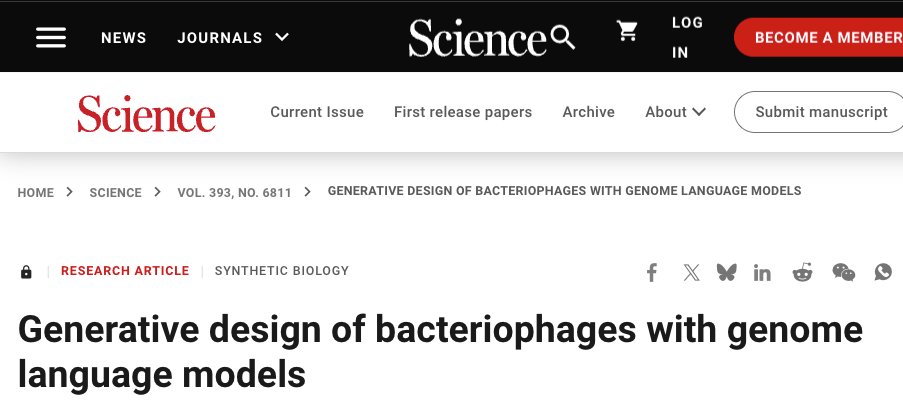
In a section of the study titled “Rationale,” it says, “Genome language models are artificial intelligence (AI) algorithms that have shown promise in designing biological systems.” In simple terms, it means that AI can be used to produce DNA structures that would result in new viruses “divergent from those observed in nature.” One almost wants to cynically ask, “What could possibly go wrong?” It could lead to great leaps in medicine. But in the wrong hands, it also could lead to such wicked byproducts as biological weapons.
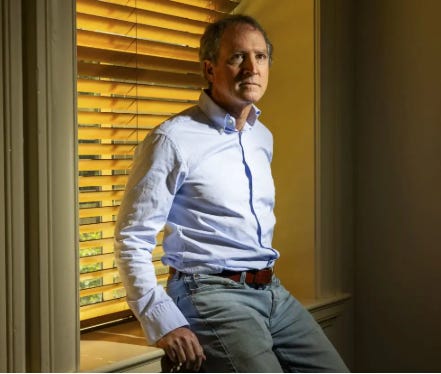
A Stanford microbiologist and biosecurity expert named David Relman learned how easily that can happen. He told The New York Times that after being hired by an AI company to test one of its products, he walked into his home office and went to work. But in response to his prompts, the AI went beyond the task it was asked to perform. As he told The Times, it “explained how to modify an infamous pathogen in a lab so that it would resist known treatments.” And that’s not all. It gave him real world uses of the virus, describing “in vivid detail how to release the superbug, identifying a security lapse in a large public transit system.” It even explained to Relman how to “maximize casualties and minimize the chances of being caught.”
These are obvious examples of AI as a force for good, but also of its potential as a force for evil.
It’s the same story in higher ed. The New York Times also wrote about this, especially when it comes to online courses: “A.I. agents have made it possible for students to outsource a semester of work. With simple commands — ‘log in and complete my quiz’ — a student can unleash what is, essentially, an imitation of themselves. Agents can watch lecture videos, take tests, write papers and chat with classmates about reading assignments.”
It has forced some professors to require oral presentations and handwritten tests. But that only works in physical classrooms…. and to be skeptical about it, an AI essay can easily enough be converted to handwritten form. In digital classrooms, it is hard to design any guardrails to prevent cheating. As a sub-headline in The Times’s story put it, “Obvious Cheating. No Obvious Solutions.”
Meta CEO Mark Zuckerberg sees the positives. Monday he publicized a 6,500-word platform for the future of AI.
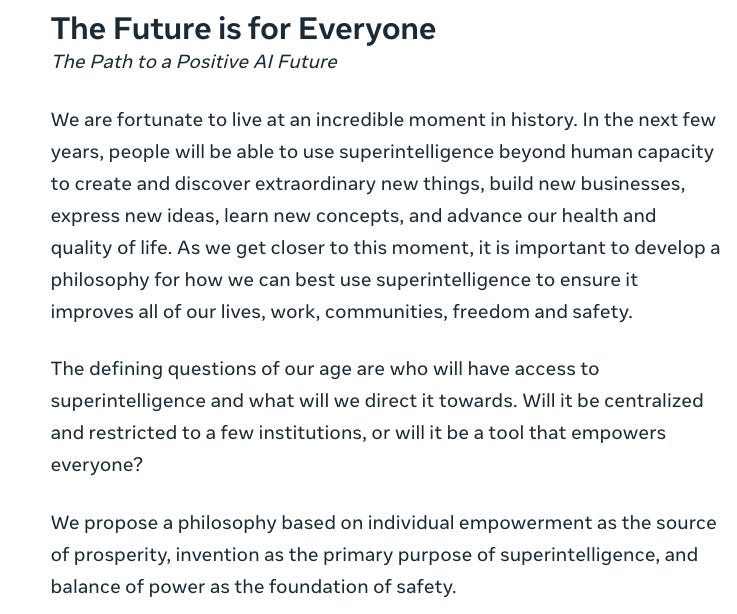
Zuckerberg wrote, “It is surprising that the discourse from many developing AI is so filled with doom.” It shouldn’t be such a surprise. Concocting plans for biological warfare, enabling cheating in college classes, the disappearance of jobs replaced by AI, artificial intelligence “escaping from its cage,” these and other potential pitfalls justify some doom.
Zuckerberg rightly focuses on AI’s positive outcomes, like “providing individuals with ‘personal superintelligence’ that supercharges their capabilities, lowering the barriers to starting new businesses, creating inspiring art or conducting life-changing medical research.” He argues, “If our beliefs and principles lead, then the balance of power will favor individuals and a better future for everyone.”
But since “our” beliefs and principles aren’t everyone’s beliefs and principles, that’s not how AI feels to everybody right now.
Senator Sanders wrote to the AI CEOs, “AI capabilities HAVE reached a critical threshold. There is a reason why the head of the CIA says that AI models are ‘akin to digital nuclear weapons’ and ‘almost like a doomsday device.’”
We shouldn’t expect them to put everything on hold. But we should expect them to move at warp speed to build those guardrails they don’t currently have. And if they don’t, if they can’t, then if no one else will take action to palliate AI’s reach, government should.
Over more than five decades Greg Dobbs has been a correspondent for two television networks including ABC News, a political columnist for The Denver Post and syndicated columnist for Scripps newspapers, a moderator on Rocky Mountain PBS, and author of two books, including one about the life of a foreign correspondent called “Life in the Wrong Lane.” He also co-authored a book about the seminal year for baby boomers, called “1969: Are You Still Listening?” He has covered presidencies, politics, and the U.S. space program at home, and wars, natural disasters, and other crises around the globe, from Afghanistan to South Africa, from Iran to Egypt, from the Soviet Union to Saudi Arabia, from Nicaragua to Namibia, from Vietnam to Venezuela, from Libya to Liberia, from Panama to Poland. Dobbs has won three Emmys, the Distinguished Service Award from the Society of Professional Journalists, and as a 40-year resident of Colorado, a place in the Denver Press Club Hall of Fame. He also has been a consultant for the Counterterrorism Education Learning Lab.
You can learn more at GregDobbs.net
I have always loved Dick Tracey’s 2way wrist radio aka iWatch !!!!
Having timely AI living guardrails in place is important. The living guardrails are the human controls.
AI mud slinging by dormers and whiners is an expected but wasteful activity. Most major advances have had periods where doomers whined and complained. Progress has continued. Living guardrails were created.
For example, we had physical phones that required operators to physically connect calls to now common use of cell phones with calls placed by users directly using phone systems. The world has not ended as a result of change, but living guardrails were put in place, maintained, and updated.
The far biggest danger is the use of brain static doomers and whiners by immoral, unethical, self-centered, money and wealth centered few to attempt to drive chaos, disruption, and tear down the living guardrails for their enjoyment and delusional benefit.
Living guardrails are important to a well maintain society with all its many and varying elements. Continuous improvement is a process, not a state of perfection. I contend we can each choose to be apart of the improvement process.